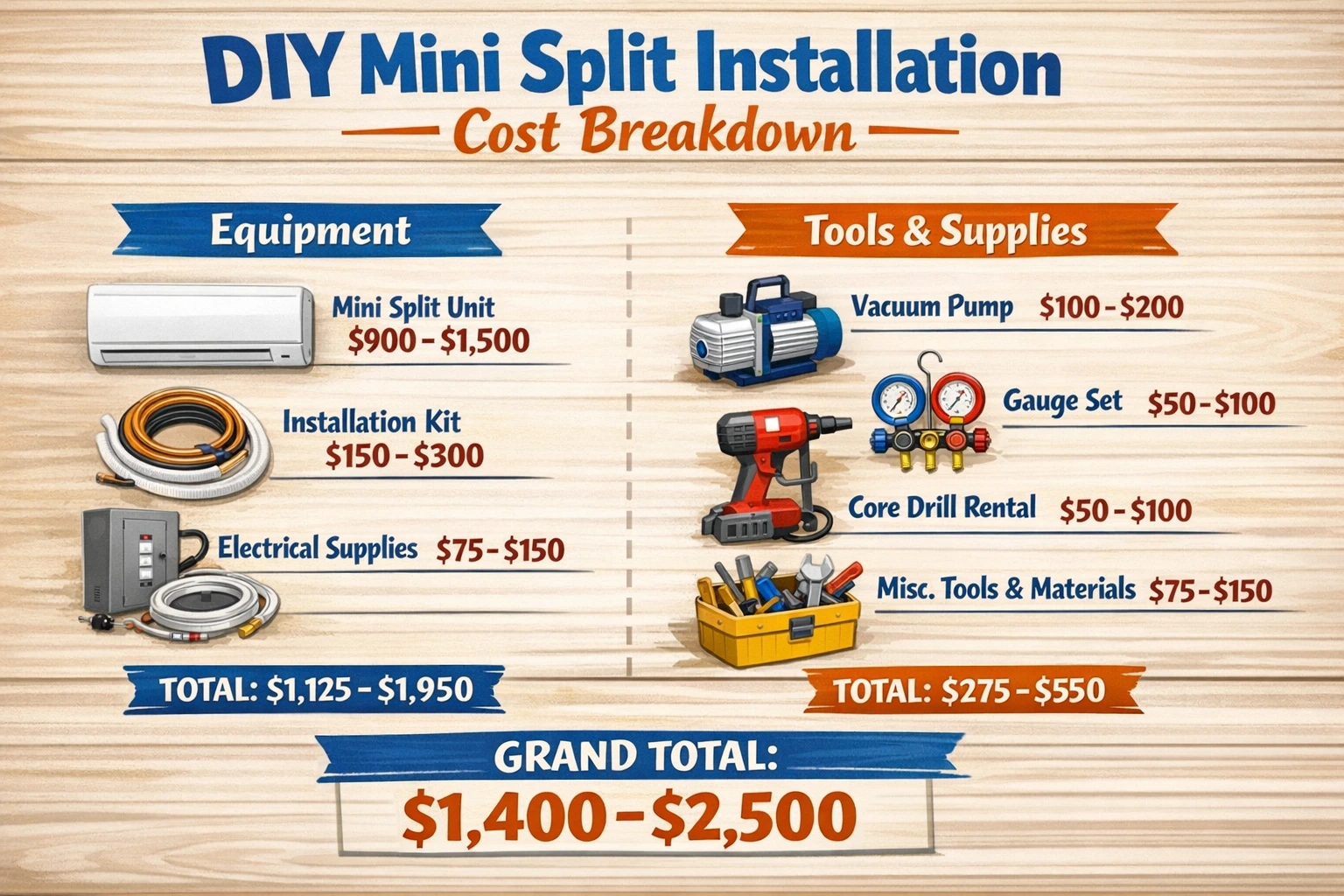
Quick answer: Most DIY mini-split installations cost between $1,500 and $4,000 total, depending on system size, required tools, and electrical setup. In many cases, homeowners save $2,000 to $5,000 compared to hiring a professional.
DIY mini-split installation can save thousands, but the total cost is not always as straightforward as it seems. Beyond the system price, factors like tools, electrical setup, and installation complexity can significantly impact your final cost.
This guide breaks down realistic DIY mini-split installation costs, including equipment, tools, hidden expenses, and situations where costs can increase unexpectedly.
Average DIY Mini Split Installation Cost
Most DIY mini split installations fall within the following cost ranges:
| Cost Category | Typical Range |
|---|---|
| Mini Split System | $900 – $3,500+ |
| Tools | $100 – $500 |
| Electrical Materials | $100 – $300 |
| Mounting + Accessories | $50 – $200 |
| Total DIY Cost | $1,500 – $4,000+ |
For most single-room installations, total costs tend to land between $1,800 and $3,000, especially when tools and basic materials are included.
The final cost varies mainly based on system size, installation complexity, and whether you already own the required tools. If you are unsure what size system you need, review this mini-split sizing guide before purchasing.
What Affects the Cost of DIY Mini Split Installation?
DIY mini split costs can vary significantly depending on several key factors:
- System size: Larger BTU systems cost more upfront
- Number of zones: Multi-zone systems increase complexity and price
- Electrical setup: Existing wiring vs new circuit installation
- Wall type: Brick, concrete, or wood framing affects installation difficulty
- Tool ownership: Buying vs renting or already owning required tools
Among these, system size and electrical setup tend to have the biggest impact on total cost. These factors explain why one DIY install might cost closer to $1,500, while another might reach $4,000 or more.
Mini Split System Cost
The system itself is the largest expense. Pricing varies based on BTU size, brand, and whether the system is designed for DIY installation.
- 9,000–12,000 BTU: $900–$1,500
- 18,000 BTU: $1,200–$2,000
- 24,000+ BTU: $1,800–$3,500+
DIY-friendly systems with pre-charged line sets often cost more upfront but reduce installation complexity and the need for tools.
Some systems are specifically designed to simplify installation and reduce tool requirements. See our guide to the best DIY mini split systems to compare options.
Tools Needed (and Their Cost)
Most DIY mini split installations require specialized tools unless you are using a fully pre-charged system.
- Vacuum pump: $100–$300
- Manifold gauge set: $50–$150
- Torque wrench: $50–$150
- Drill and hole saw: $50–$150
Pro tip: Many first-time DIY installers choose to rent tools like vacuum pumps instead of buying them, which can reduce upfront costs without affecting installation quality.
Properly evacuating refrigerant lines is critical for system performance and long-term reliability.
You can see the full breakdown in this mini split installation tools guide.
Electrical and Installation Materials
In addition to the system and tools, most installations require electrical components and mounting materials.
- Disconnect box: $20–$60
- Wiring and conduit: $50–$200
- Outdoor mounting bracket or pad: $50–$150
These costs are often overlooked but are necessary for safe and code-compliant installation.
Hidden Costs to Watch For
Some DIY installations include additional costs that are not always obvious upfront:
- Permit fees (depending on local requirements)
- Electrical upgrades or new circuit installation
- Extra line set length or extensions
- Condensate pump if gravity drainage is not possible
- Wall repair or finishing after installation
These costs can add several hundred dollars to your total and are often overlooked in initial estimates.
When DIY Installation Can Cost More Than Expected
While DIY installation is often more affordable, certain situations can increase costs quickly:
- Upgrading your electrical panel to handle the system
- Installing longer refrigerant lines than planned
- Fixing installation mistakes or leaks
- Needing professional help mid-install
In these scenarios, total DIY costs can approach or even exceed entry-level professional installation. Avoiding common setup issues is key, so it’s worth reviewing these mini split installation mistakes before starting.
Real DIY Mini Split Cost Examples
Here are a few realistic DIY installation scenarios:
- Small room (DIY system): $1,200 unit + $300 tools = $1,500 total
- Garage install: $1,800 system + $400 materials = $2,200 total
- Larger room setup: $2,500 system + $500 tools/materials = $3,000 total
Installation time typically ranges from 4 to 8 hours for a first-time DIY setup, depending on preparation and layout complexity.
DIY vs Professional Installation Cost
One of the main reasons homeowners consider DIY installation is the potential cost savings.
- DIY installation: $1,500 to $4,000 total
- Professional installation: $3,000 to $8,000+
DIY installation can significantly reduce total cost, but it requires careful setup and attention to detail. Professional installation includes labor warranties, system calibration, and code compliance, which can reduce the risk of long-term issues.
For a broader cost comparison, see this mini split cost guide.
Is DIY Mini Split Installation Worth It?
DIY installation can be a good option depending on your experience and setup:
- Best for: Single-room installs, garages, and homeowners comfortable with tools
- Not ideal for: Multi-zone systems, complex layouts, or strict code requirements
For a full step-by-step overview, see this DIY mini split installation guide.
Final Thoughts
DIY mini split installation can be a cost-effective option, especially for straightforward, single-room setups. Understanding the full cost, including tools, materials, and potential hidden expenses, helps ensure a smoother installation and better long-term performance.
FAQs
How much can you save by installing a mini split yourself?
Most homeowners save between $2,000 and $5,000 by installing a mini split themselves instead of hiring a professional.
Do DIY mini splits require special tools?
Most installations require tools such as a vacuum pump and a gauge set unless using a pre-charged system.
What is the cheapest way to install a mini split?
The most cost-effective option is using a DIY system with pre-charged lines, which reduces the need for specialized tools and professional assistance.