Choosing the correct mini split size is one of the most important decisions in the buying process — and one of the easiest to get wrong.
Undersizing can lead to nonstop runtime and inconsistent comfort. Oversizing increases upfront cost, causes short-cycling, and may create humidity issues. This guide explains how to select the right BTU capacity based on real-world conditions, not just square footage estimates.
What Mini Split Size (BTU Capacity) Actually Means
Mini split size refers to cooling and heating capacity, measured in BTUs (British Thermal Units). Higher BTU ratings provide greater output capacity, but that does not automatically mean better performance.
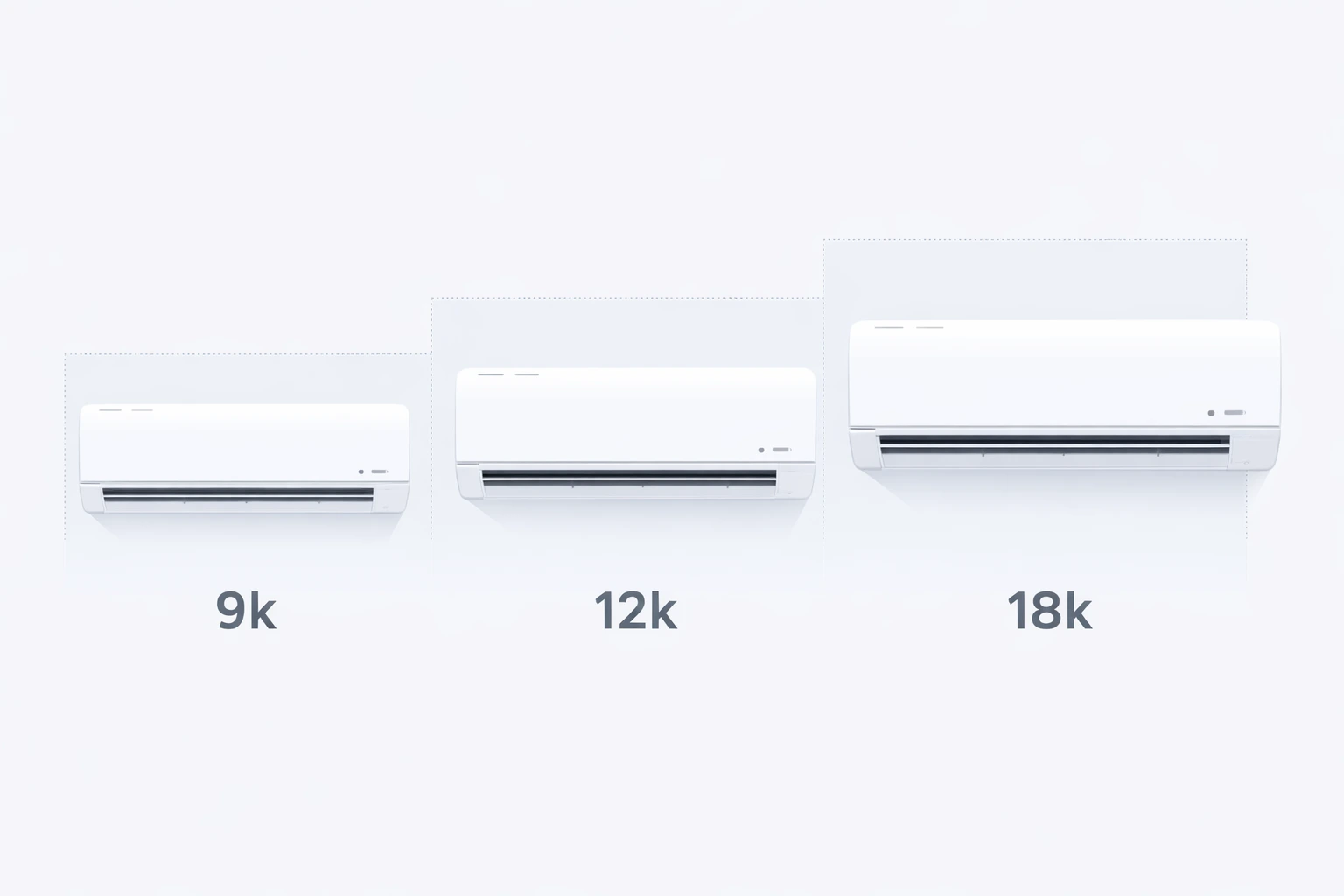
Common single-zone sizes include 9,000 BTU (9k), 12,000 BTU (12k), and 18,000 BTU (18k). These numbers must be evaluated in context — room characteristics matter more than raw square footage.
Proper sizing also affects long-term efficiency and energy use, which directly influences mini split operating cost and overall total mini split cost.
General Room Size Guidelines (Starting Reference Only)
These are rough starting points — not final sizing decisions:
- 9k BTU: small bedrooms, offices, or enclosed rooms
- 12k BTU: medium-sized rooms or moderately open spaces
- 18k BTU: large rooms, garages, or open-concept areas
Square footage alone rarely produces accurate sizing. Homes with unique layouts, older insulation, or high ceilings often require adjustments.
Key Factors That Influence Required BTU Capacity
Several real-world variables can push you up or down a size category.
- Ceiling height: Taller ceilings increase air volume and BTU demand.
- Insulation quality: Poor insulation increases heating and cooling load.
- Sun exposure: South- and west-facing rooms gain more heat.
- Climate zone: Extreme heat or cold increases system demand.
- Internal heat sources: Kitchens, workshops, and gyms generate additional load.
Ignoring these factors is a common reason homeowners feel disappointed after installation.
Why Oversizing Reduces Efficiency and Comfort
Bigger is not always better.
An oversized mini split can cool a space too quickly, shutting off before sufficient humidity is removed. This often leaves rooms feeling damp or clammy, particularly in humid regions.
Frequent short-cycling also increases component wear and can raise long-term energy consumption, impacting overall operating expense.
Why Undersizing Increases Long-Term Cost
An undersized system may run continuously during peak weather, struggling to maintain set temperatures. Continuous runtime increases electricity usage and can shorten equipment lifespan.
Over time, undersizing can increase monthly energy use and reduce overall value.
Single-Zone vs Multi-Zone Sizing Differences
Single-zone systems are typically easier to size because one indoor unit serves one defined space.
Multi-zone systems require balancing total connected indoor capacity with the outdoor unit’s supported output. If multiple zones operate simultaneously, total demand can approach system limits.
This added complexity is one reason multi-zone systems often carry higher installation and equipment costs compared with simpler single-zone setups.
When to Move Up or Down a Size Category
Moving up one size may be appropriate if the space has high ceilings, poor insulation, heavy sun exposure, or extreme climate demands.
Moving down may be reasonable in well-insulated, shaded rooms used intermittently.
Installation approach can also influence decisions, especially for homeowners evaluating DIY mini split installation considerations.
Bottom Line: Accurate Sizing Improves Performance and Cost Efficiency
Choosing the correct mini split size requires evaluating capacity, layout, insulation, and climate together — not relying solely on square footage charts.
Accurate sizing improves comfort, reduces short-cycling, and helps control long-term operating cost.
If you are still early in your decision process, start with whether a mini split is right for your home before selecting equipment.