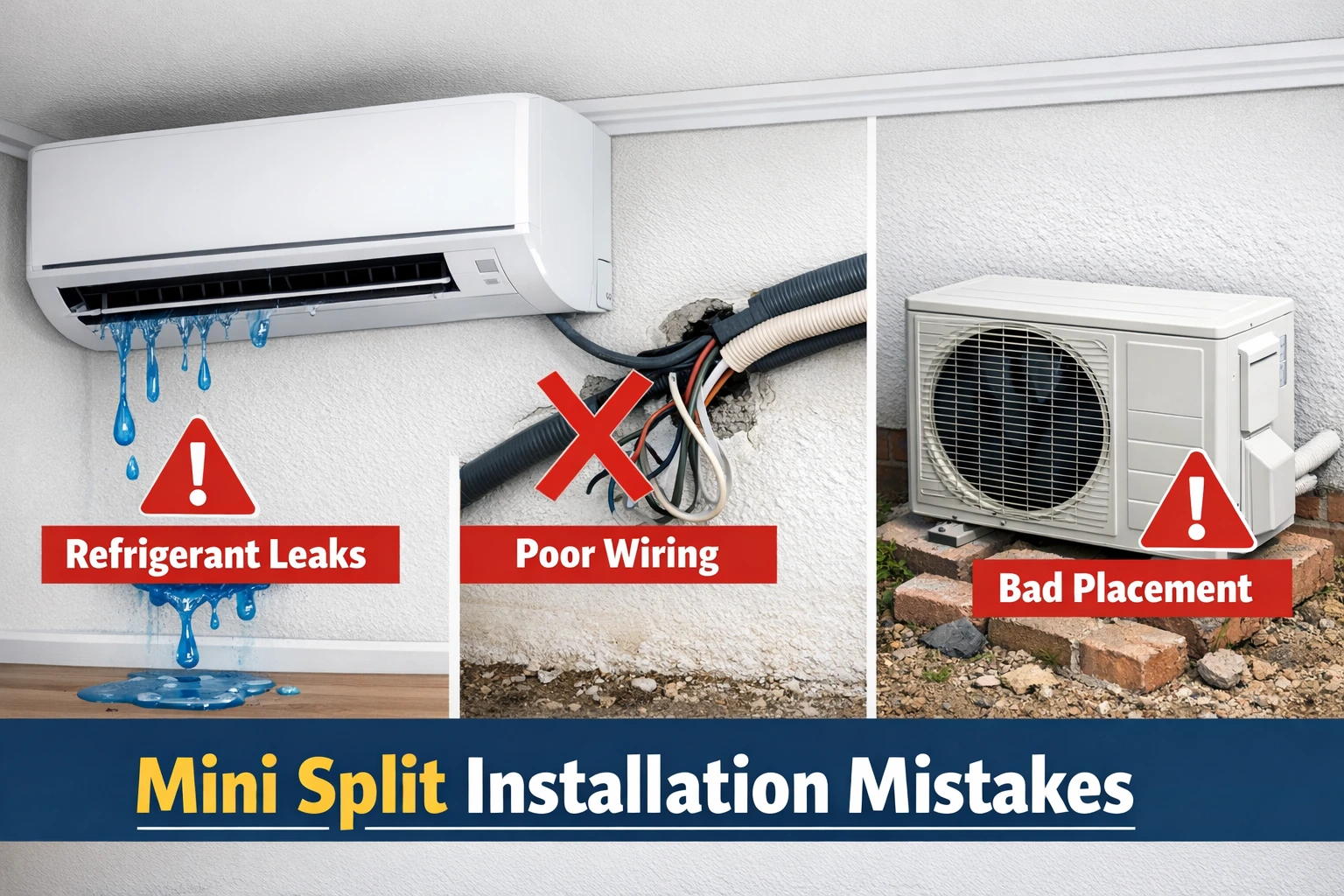
Quick answer: The most common mini split installation mistakes include not vacuuming refrigerant lines, improper mounting, incorrect electrical setup, and poorly sealed connections. These errors can reduce efficiency, cause leaks, or lead to long-term system damage.
Installing a mini split system yourself can save money, but small mistakes during installation can quickly lead to performance issues, higher energy costs, or expensive repairs.
Most problems seen after installation are not caused by the equipment itself, but by incorrect setup or skipped steps during installation.
This guide covers the most common mini split installation mistakes, why they happen, and how to avoid them.
Why Installation Mistakes Matter
Mini split systems rely on precise installation to operate efficiently. Even minor errors can affect cooling performance, energy efficiency, and system lifespan.
In many DIY installations, issues like weak cooling or system errors are often traced back to installation mistakes rather than the system itself.
1. Not Vacuuming the Refrigerant Lines
Failing to properly evacuate refrigerant lines is one of the most serious mistakes.
Air and moisture left in the system can reduce efficiency and damage internal components over time.
Most installations require a vacuum pump unless you are using a system designed to eliminate this step. See the full tool requirements in this mini split tools guide.
2. Improper Flare Connections
Loose or over-tightened flare connections can cause refrigerant leaks, which may not be immediately noticeable.
Using a torque wrench ensures proper sealing and helps prevent long-term performance issues.
3. Incorrect Indoor Unit Placement
Placing the indoor unit incorrectly can restrict airflow and reduce cooling effectiveness.
Units should be installed where air can circulate freely and evenly throughout the space.
4. Poor Outdoor Unit Positioning
The outdoor unit requires proper clearance, airflow, and stable mounting.
Poor placement can reduce efficiency and increase wear over time.
5. Skipping Electrical Requirements
Mini split systems often require a dedicated circuit and proper wiring setup.
Incorrect electrical work can lead to system failure or safety risks.
6. Improper Drainage Setup
Condensate drainage must be properly routed to prevent water buildup.
Poor drainage can lead to leaks, water damage, or mold issues inside the home.
7. Incorrect Line Set Routing
Refrigerant lines should be routed carefully to avoid bends, kinks, or restrictions.
Damaged or restricted lines can reduce system performance and efficiency.
8. Not Sealing the Wall Opening
Leaving gaps around the line set opening allows air, moisture, and pests to enter.
Proper sealing improves insulation and protects your home.
9. Skipping Final System Checks
Testing the system after installation is critical.
Skipping pressure checks or startup testing can allow small issues to go unnoticed until they become bigger problems.
How to Avoid Mini Split Installation Mistakes
Most installation mistakes can be avoided with proper preparation and attention to detail:
- Use the correct tools and equipment
- Follow manufacturer instructions carefully
- Double-check all connections and fittings
- Take time to test the system before finishing
Choosing one of the best DIY mini split systems can also reduce installation complexity.
For a full overview of the installation process, see this DIY mini split installation guide.
When to Consider Professional Installation
DIY installation is not always the best option.
Professional installation may be a better choice for complex layouts, multi-zone systems, or when local codes require licensed work.
To understand the full cost comparison, see this DIY mini split installation cost guide.
Final Thoughts
Mini split installation mistakes are one of the most common reasons systems underperform or fail early. Taking the time to follow proper installation steps and use the right tools can make a significant difference in long-term performance and reliability.
FAQs
What is the most common mini split installation mistake?
Failing to vacuum refrigerant lines is one of the most common and serious mistakes.
Can installation mistakes damage a mini split system?
Yes, improper installation can reduce efficiency, cause leaks, and shorten system lifespan.
Are DIY mini split installations reliable?
They can be reliable if installed correctly, but mistakes during installation can lead to long-term issues.